Learning

Learning Beyond Walls.

Two mixed-age studios. IB-inspired inquiry braided with the craft disciplines that turn wonder into mastery.

The literacy shift

Skills expire. Tools change. Concepts endure.

Critical Thinking

over instruction

We do not tell children what to think. We build their capacity to analyse, evaluate and decide for themselves — the single most in-demand skill in every future-of-work report, and the one thing AI cannot replace.

Transferable Concepts

over memorised content

Facts are free and infinite. We teach mental models, frameworks and patterns of thinking that travel across subjects, careers and technologies — so knowledge compounds instead of expiring.

Wise Discernment

over blind compliance

Obedience is a factory skill. We develop ethical reasoning, self-regulation and the courage to question — so children lead with integrity, navigate misinformation and choose wisely under pressure.

Human-led. AI-supported. Concept-based learning builds capacities that travel across unknown futures.

Curriculum

The IB PYP pathway, guided by the PPPP™ compass and powered by WEITS™.

Inquiry-driven, concept-based and future-facing. Six transdisciplinary themes spiral through Studio 1 and Studio 2 — each one mapped to the full Programme of Inquiry.

Explore the full POI for Studio 1 & Studio 2

01

IB-inspired inquiry

02

youcubed Mathematics (Jo Boaler)

03

Writers Workshop

04

Project-Based Learning

05

Outdoor Learning

06

Design Thinking

07

Portuguese

08

English

09

Visual Arts

01

Music

02

Movement

03

Toddle portfolios

04

Human-centred technology (Harvard Project Zero · Common Sense Media)

The 6–8 week PYP inquiry spiral · WEITS in motion

From Wonderto Enterprise.

Every inquiry begins with carefully designed provocations and expert guidance. As confidence grows, children gradually take increasing ownership of the questions they ask, the investigations they pursue and the actions they choose to take. Families, educators, community partners and expert practitioners enrich the journey throughout, ensuring every inquiry remains both academically rigorous and deeply human.

One unit of inquiry = 6 to 8 weeks. Eight clear milestones. A cycle that loops back and forth — even within a single day — so learners revisit, refine, and go deeper. Every learner reaches Stage 08 · Enterprise to share their learning before the unit closes.

Grounded in the work of Kath Murdoch and H. Lynn Erickson — two of the most cited voices in inquiry-based and concept-based learning worldwide.

Stage 01 · Week 1

Wonder Notice. Question. Imagine.

WK 1WK 2WK 3WK 4WK 5WK 6WK 7WK 80102030405060708

The cycle loops back and forth

A learner might revisit Tune In after Experiment — or move from Make back to Investigate. This looping can happen in a single day or across a whole unit. What matters is that by the end of each 6–8 week unit, every learner reaches Stage 08 · Enterprise to share their learning with the community.

Different learners · Different paces · Same inquiry

The 8 milestones, step by step

Same cycle, listed linearly for clarity.

  1. 01

    Wonder

    Notice. Question. Imagine.

    Week 1

  2. 02

    Tune In

    Connect to prior knowledge & passions.

    Week 1–2

  3. 03

    Investigate

    Research, interview, observe, gather.

    Week 2–3

  4. 04

    Experiment

    Test, prototype, iterate, reflect.

    Week 3–4

  5. 05

    Make

    Build, design, write, compose, code.

    Week 4–5

  6. 06

    Share

    Exhibit, perform, publish, present.

    Week 5–6

  7. 07

    Act

    Service, advocacy, real-world change.

    Week 6–7

  8. 08

    Enterprise

    Execute. Launch. Make a venture of it.

    Week 7–8

Growing Agency

Teacher LedChild Led

Children gradually move from supported inquiry towards increasing independence, ownership and leadership.

  1. 01

    Teacher Designs

    • Teacher introduces the provocation.
    • Models thinking.
    • Creates psychological safety.
  2. 02

    Shared Inquiry

    • Questions emerge together.
    • Teacher scaffolds.
    • Children contribute.
  3. 03

    Guided Choice

    • Children begin making meaningful decisions.
    • Teacher provides challenge and support.
  4. 04

    Child-Led Inquiry

    • Children increasingly direct investigations.
    • Teachers coach, question and extend thinking.
  5. 05

    Agency in Action

    • Children create. Serve. Lead. Innovate.
    • Launch authentic projects that contribute to the wider community.
Unit ofInquiryChildFamilyTeacherCommunityExpert-in-ResidenceHuman-led

Hover or tap a node

  • Child
  • Family
  • Teacher
  • Community
  • Expert-in-Residence
  • Human-led AI
  1. 01Shared Questions
  2. 02Authentic Experiences
  3. 03Enterprise
  4. 04Community Impact

The curriculum provides the destination. Our community shapes the journey.

The Programme of Inquiry defines the concepts every learner explores. The people within our learning community — children, families, educators and partners — bring those concepts to life through their questions, strengths, experiences and contributions.

No two years at ISI will ever be identical, because no two communities are ever the same.

The research behind the cycle

Two researchers. One clear method for learning that lasts.

Research · 2015Cited 2,400+ times in PYP literature

Kath Murdoch

Author, The Power of Inquiry (2015)

"Inquiry is a stance, not a strategy."

Murdoch's cycle — tune in, find out, sort out, go further, make conclusions, take action — is recursive. Returning to earlier stages isn't a detour; it's where the deepest thinking happens.

Why it matters for our children: they learn to think in cycles, not lines. They get comfortable revisiting ideas, refining them, and acting on what they discover.
Research · 2017Foundation of IB concept-based learning

H. Lynn Erickson

Co-author, Concept-Based Curriculum and Instruction for the Thinking Classroom

"Facts are the foundation. Concepts are the transfer."

Erickson's Structure of Knowledge shows learning becomes transferable only when facts and skills are synergistically linked to concepts and generalisations. Each cycle lifts thinking up the structure.

Why it matters for our children: they don't just complete a unit. They build durable, transferable understanding they carry into MYP, into enterprise, into life.

Sources

  • Murdoch, K. (2015). The Power of Inquiry: Teaching and learning with curiosity, creativity and purpose in the contemporary classroom. Seastar Education.
  • Erickson, H. L., Lanning, L. A., & French, R. (2017). Concept-Based Curriculum and Instruction for the Thinking Classroom (2nd ed.). Corwin.
  • International Baccalaureate Organization (2018). Learning and teaching (Primary Years Programme framework).

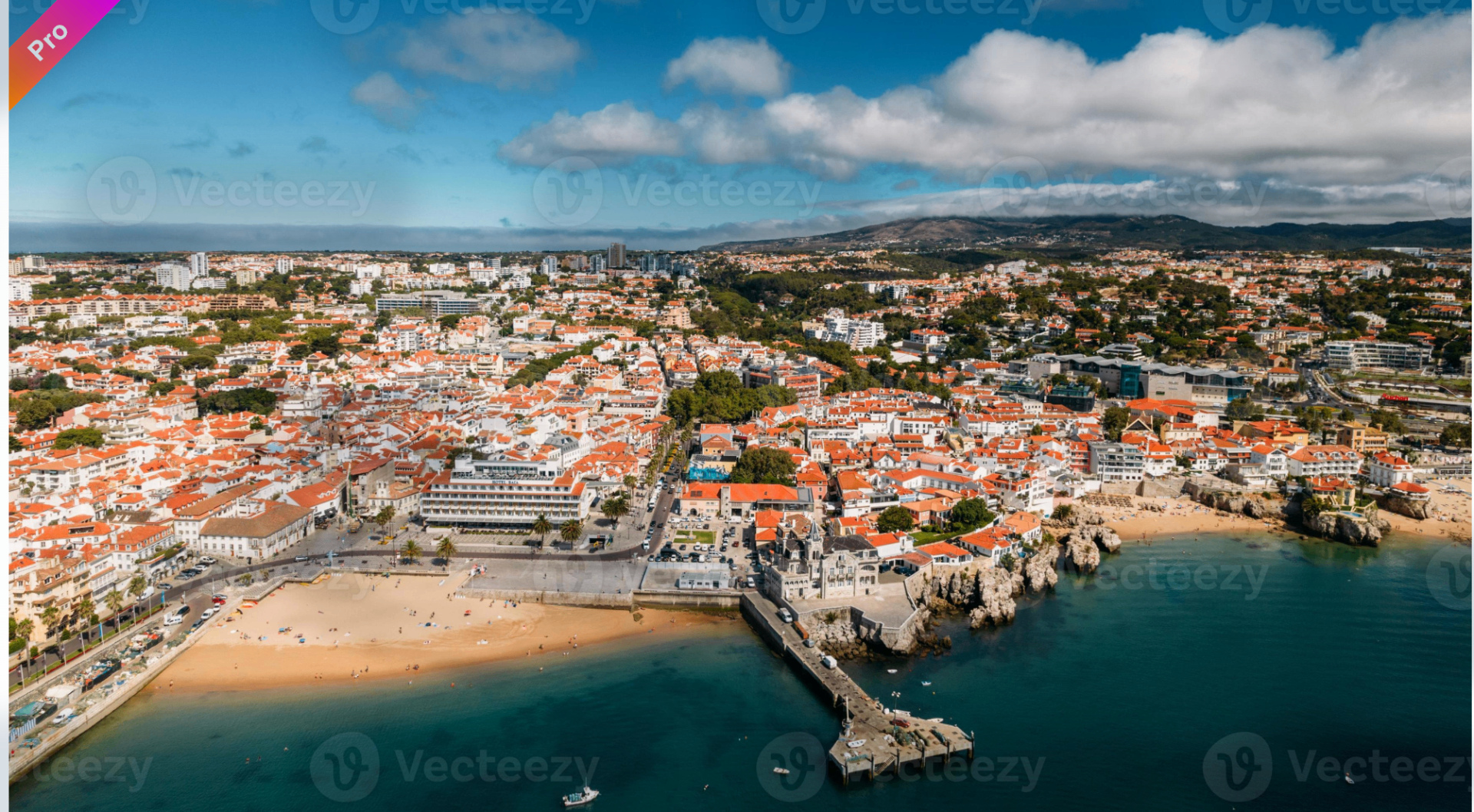
Cascais as our classroom

The town itself becomes
an extension of the studio.

Located in the heart of Cascais, every beach, market and museum becomes a living learning environment.

Cascais town
Beaches
Marina
Markets
Museums
Nature
Businesses
History
Culture
Community

Why Cascais

A town engineered for future-proof learning.

Cascais is not the backdrop — it is the curriculum. Ocean, marina, markets, museums, start-ups, sustainability labs and a multilingual civic culture line up — square by square — with our PPPP™ compass and WEITS™ pillars.

PPPP™ compass · how Cascais shapes the inquiry

Purpose

Civic life on display — town hall debates, heritage trails and community festivals give every inquiry a real audience and a real reason.

People

A multilingual, multicultural population of fishermen, founders, artists and scientists — children learn directly from the humans who built the town.

Place

Atlantic coastline, Sintra-Cascais Natural Park, cobbled squares and historic forts — a living geography lab within walking distance.

Practice

Markets, marinas, ateliers and labs become weekly studios — knowledge is rehearsed in the world, not just on the page.

WEITS™ pillars · how Cascais grows the child

Wellbeing

Beaches, forest trails and slow Mediterranean rhythms — nervous-system regulation built into the school week.

Entrepreneurship

Family-run markets, ateliers and a thriving small-business culture — children pitch, prototype and trade in real economies.

Innovation

Nova SBE, Cascais start-up hubs and design studios — proximity to people reinventing how Portugal works.

Technology

A Smart-City pilot town — sensors, mobility tech and digital civic services become hands-on case studies.

Sustainability

Marine reserves, recycling pioneers and the Sintra-Cascais Natural Park — stewardship is lived, not lectured.

One town. Two frameworks. Every walk becomes a lesson that future-proofs the child.

Our Mission

When the Child Belongs, the Community Thrives.

Three commitments

Three commitments that bring ISI Cascais and DeMontaigne Life Design together.

“We hold one standard above all others: whether this ecosystem genuinely serves the child, the family, and the wider community — over time.”

In partnership with DeMontaigne Life Design ↗