Research & Practice Series · Journal 2 of 4 · 20 July 2026
Belonging in Its Many Shades
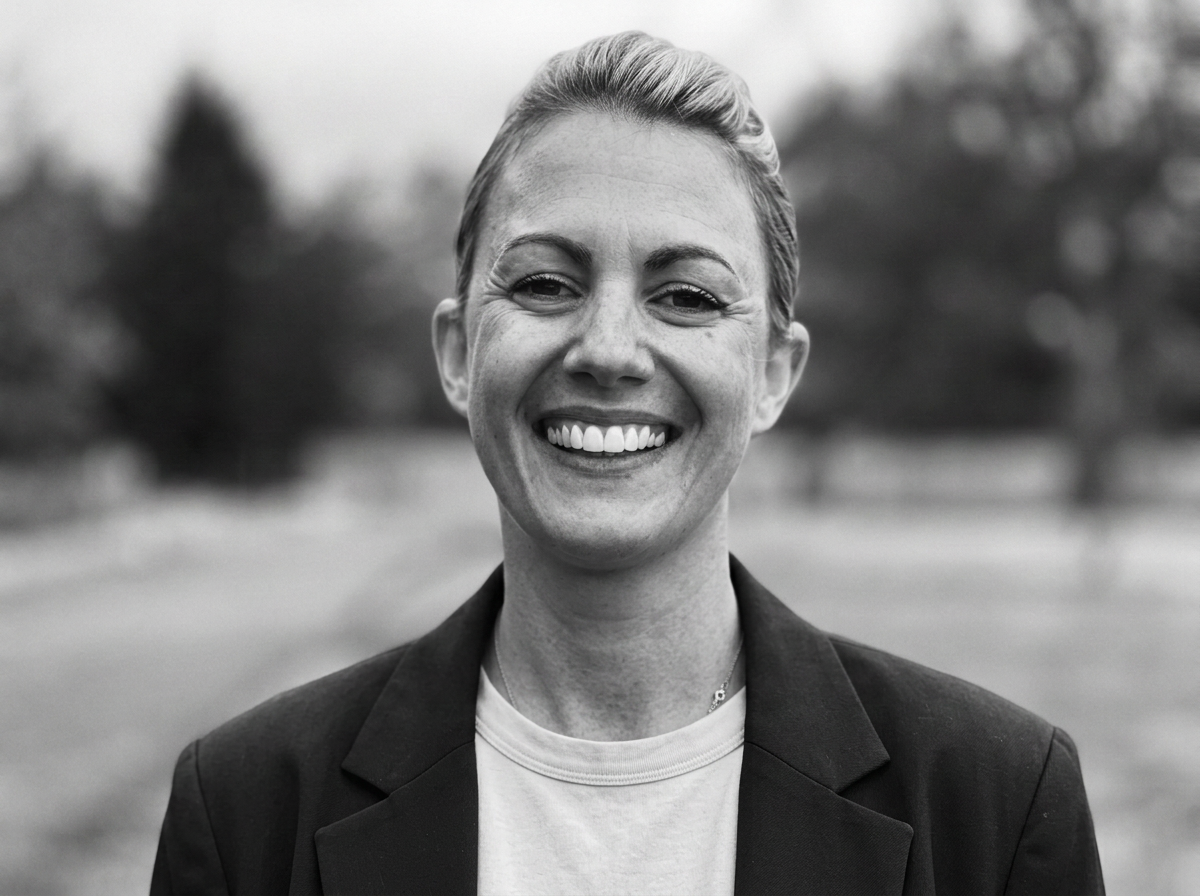
“Where are you from?”
It should be a simple question. My usual answer is: “How long do you have?”
I was born in Saudi Arabia, raised in Portugal and grew up with British heritage and English as my first language. Portugal was home - a minha terra - yet when I went to boarding school, I soon began to realise, I was not really English either. Back in Portugal, language sometimes marked me as not being entirely Portuguese either.
For a long time, I did not know how to answer that question without editing parts of myself to make the answer easier for someone else to understand.
If you have ever read Third Culture Kids, you may recognise this experience. If you have not, perhaps you should. It gives language to the lives of children who grow up across cultures: belonging everywhere in fragments, yet sometimes feeling fully claimed by nowhere.
My sense of belonging shifted depending on where I stood, who was asking and which part of my story they were prepared to recognise. Eventually, I understood that belonging did not require me to choose one part of myself over another. Identity can hold many places, languages, histories and relationships at once.
*Belonging has many shades.*
What the research tells us
The term Third Culture Kid describes a child who spends a significant part of their developmental years outside their parents’ culture or country of nationality. These children often build an identity from several cultural worlds rather than inheriting one uncomplicated sense of home.
That experience can bring considerable strengths: adaptability, cultural sensitivity, linguistic flexibility and the ability to see a situation from more than one perspective. International mobility can also involve repeated losses - of friendships, familiar places, routines, languages and the feeling of being immediately understood. Research repeatedly identifies identity, belonging and sustained relationships as important areas of adjustment for internationally mobile children.
The important distinction is not whether a child belongs to more than one culture. It is whether they feel permitted to integrate those cultures into a coherent sense of self.
Research into multicultural identity suggests that wellbeing is stronger when people can experience their different cultural identities as compatible parts of themselves. When those identities remain compartmentalised - or when the person feels required to choose one while concealing another - their sense of self may become less stable. For Third Culture Kids, identity integration has been associated with greater self-concept consistency and self-efficacy.
Belonging begins with a person
We like to design belonging as an environment: the campus, the colours on the wall, the photograph on the prospectus. It matters, and I have spent years caring about it. But the research points somewhere narrower and more demanding than a building.
Across decades of resilience studies one finding recurs so often that it has become a working definition of the field. The Center on the Developing Child at Harvard University puts it plainly: the single most common factor for children who end up doing well is the support of at least one stable and committed relationship with a parent, caregiver or other adult. Not a curriculum. Not a campus. A person who stays.
Inside school, the same pattern shows up in the numbers. A meta-analysis of 99 studies involving more than 88,000 students found that the affective quality of the teacher-student relationship was associated with school engagement at medium to large effect sizes, and with achievement at smaller but consistent levels. Children do not ask first whether a place is excellent. They ask, usually without words, whether anyone in it knows them.
That person is also the first thing to disappear when life becomes hard. In a Welsh national survey of 2,497 adults, 86.6 per cent of those with no adverse childhood experiences reported always having a trusted adult available. Among those with four or more, only 44.4 per cent did. Adversity narrows the circle of people who show up. For an internationally mobile child, that circle is already being thinned by the moves themselves.
One person also seems to matter for longer than one school year. In a longitudinal study of around 2,000 young people followed across two decades, at least one positive, committed adult-child relationship was associated with lower depression, anxiety and perceived stress in adulthood, regardless of the adversities those young people had carried. A separate Australian cohort of 1,568 adults found that belonging at school at fifteen or sixteen was associated with fewer symptoms of depression, anxiety and stress at nineteen, at twenty-four and again at twenty-eight. Belonging is not a mood that expires at the end of Year 11.
What it costs when a child does not belong
This is where the personal and the public meet, and it is the part I have watched most closely across the generations I have worked with.
In the OECD's most recent large-scale assessment, an average of 74.6 per cent of 15-year-olds agreed that they belong at their school. Roughly one in four did not.
The economic evidence is blunt about what tends to follow. In a London longitudinal study followed to age 28, children who had shown conduct disorder at ten had used around 70,000 pounds of public services by adulthood, against roughly 7,400 pounds for children who had shown no such problems - ten times the cost, with crime, additional educational provision and foster or residential care accounting for most of it. A meta-analysis across 28 European countries found that costs attributable to adverse childhood experiences exceeded one per cent of national GDP in every country studied, with a median of 2.6 per cent. The synthesis behind those estimates placed the annual cost for North America and the European Region at US$1.3 trillion. Loneliness and social isolation, measured separately, cost societies between US$2 billion and US$25.2 billion each year, while programmes that rebuild connection have been found to return between US$2.28 and US$13.72 for every dollar spent.
I have watched these numbers arrive one child at a time. A teenager who had passed through four schools and could not name a single adult who would notice if he disappeared. A boy whose intelligence was only ever discussed as a behaviour problem. A family that left because nobody ever made the accompanying parent feel that the school belonged to them too. The invoices are real, and so are the children they describe.
If I am honest about why I keep returning to this, it is because belonging is the part of education that decides whether everything else lands. A child who belongs will take a risk in a language that is not their first, ask for help before a gap becomes shame, and stay curious when a task stops being easy. That is the mission in its simplest form: that no child in our care should have to become smaller, quieter or less complicated in order to be held by a community.
When the child belongs, the adult is in the picture too
It is tempting to treat the child as the only client of a school. Mobile families know otherwise.
Global mobility research has said this for years. A 2010 survey by Brookfield Global Relocation Services found an international assignment failure rate of around 6 per cent, with 65 per cent of those failures attributed to a spouse or partner dissatisfied with the new location. The Permits Foundation found that 82 per cent of accompanying partners held a university degree, that 90 per cent had given up their own job to make the move, and that only 35 per cent worked at all during the posting. A field study of 238 expatriate spouses found that those whose own employment was severely disrupted or ended adjusted significantly less well socially than those who kept it.
Read plainly, this describes the adult who walks a child to the gate. They have usually traded their own profession, language and friends for someone else's opportunity, and are now expected to build a life in a country where no one knows them yet. A parent who does not belong cannot easily hand a child the confidence to belong. The adult needs a person too.
Belonging is not a nationality
Belonging is often reduced to geography: the place on a passport, the country named as home or the language assumed to prove membership. But identity is formed through relationships, memories, rituals, losses, cultural expectations and the places in which a person has learned to feel safe.
For an internationally mobile child, home may be plural. One language may hold family intimacy, another education, another friendship, humour or grief. A place left years ago may remain emotionally present, while the place named as home may sometimes make the child explain why they belong there.
This is not confusion that adults must resolve by choosing the most convenient label. It is complexity that a child can learn to understand and integrate.
What this means for ISI Cascais
Welcoming a child is not simply celebrating their nationality during an international day. It means remaining curious about the languages, relationships, transitions and experiences through which that child understands themselves. A child should not have to simplify their identity to make it easier for a community to accept them.
At ISI Cascais, belonging is therefore not a programme added beside academic learning. It shapes how adults listen, how curriculum is designed and how the community responds to difference. Through the PPPP Compass of Purpose, People, Place and Practice, we ask:
- Purpose. Does this learner see their identity, interests and
- possible contribution reflected in their education?
- People. Who knows this child well enough to recognise what they
- carry between cultures, languages and generations?
- Place. Does the environment communicate that different histories
- and ways of being are genuinely welcome here?
- Practice. Do our teaching, language and routines invite
- curiosity about difference rather than demand conformity?
This is complemented by the WEITS pillars of Wellbeing, Entrepreneurship, Innovation, Technology and Sustainability, which give learners different ways to express who they are and translate identity into participation and contribution.
From evidence to experience
The first article in this series examined what the data tells us about belonging: children learn, participate and recover more effectively when they feel safe, recognised and connected. OECD findings similarly associate school safety and freedom from bullying with stronger belonging, greater confidence in self-directed learning, higher life satisfaction and lower anxiety.
This second article moves from the evidence into the child’s lived experience.
Belonging is not sameness. It is not the absence of difference, and it is not successful conformity. It is the experience of knowing that every part of your story can enter the room with you.
At ISI Cascais, we do not ask children to choose between identities or quietly edit themselves to fit an established norm. We help them understand the many shades of their own identity while becoming genuinely curious about the identities of others.
But this leads us to a more difficult question. What happens when a child repeatedly receives the opposite message - when they are not recognised, cannot find their place and become known primarily through the behaviour adults want to stop?
That is where the next article begins: not with the offence, the disruption or the rebellion, but with everything that came before it.
Sources
Aldrovandi M, Rusu A, Mora K, et al. Adjustment in third culture kids: a systematic review of literature. Frontiers in Psychology. 2022;13:939383. https://pmc.ncbi.nlm.nih.gov/articles/PMC9743971/
Dewaele JM, van Oudenhoven JP. Multicultural identity integration versus compartmentalization as predictors of subjective well-being for Third Culture Kids. International Journal of Environmental Research and Public Health. 2023;20(5):3880. https://pmc.ncbi.nlm.nih.gov/articles/PMC10002138/
Filipic Sterle M, Fontaine JRJ, De Mol J, Verhofstadt LL. Expatriate family adjustment: an overview of empirical evidence on challenges and resources. Frontiers in Psychology. 2018;9:1207. https://pmc.ncbi.nlm.nih.gov/articles/PMC6064735/
OECD. PISA 2022 Results Volume II Learning During and From Disruption. 2023. https://www.oecd.org/en/publications/pisa-2022-results-volume-ii_a97db61c-en.html
National Scientific Council on the Developing Child. Supportive relationships and active skill-building strengthen the foundations of resilience: Working Paper No. 13. 2015. https://developingchild.harvard.edu/resources/working-paper/supportive-relationships-and-active-skill-building-strengthen-the-foundations-of-resilience/
Rogoff B. Side by side: Learning by observing and pitching in. Ethos. 2003;31(1):1-23. https://doi.org/10.1111/j.1548-1352.2003.00001.x
Legare CH. The development of cumulative cultural learning. Annual Review of Developmental Psychology. 2019;1:119-147. https://doi.org/10.1146/annurev-devpsych-121318-084848
Shneidman L, Gweon H, Schulz AL, Woodward AL. Learning from others and spontaneous exploration: a cross-cultural investigation. Child Development. 2016;87(3):723-735. https://doi.org/10.1111/cdev.12502
Clegg JM, Wen NJ, DeBaylo PH, et al. Teaching through collaboration: flexibility and diversity in caregiver-child interaction across cultures. Child Development. 2020. https://doi.org/10.1111/cdev.13410
Rosenthal CJ, Marshall VW. Generational transmission of family ritual. American Behavioral Scientist. 1988;31(6):669-679. https://doi.org/10.1177/000276488031006005
Murdock E, Smyk M. Family rituals in long-distance families - are analog practices transferred to the virtual world? International Convention of Psychological Science, Prague; 2024. https://orbilu.uni.lu/bitstream/10993/61978/1/ICP_24_EM_CZ.pdf
Women of Thailand. Thai culture and customs: showing respect - the head is high and the feet are low. https://www.womenofthailand.com/social.htm
Thai honorifics, including khun and the use of kinship terms as titles of respect. https://en.wikipedia.org/wiki/Thai_honorifics
Roorda DL, Koomen HMY, Spilt JL, Oort FJ. The influence of affective teacher-student relationships on students' school engagement and achievement: a meta-analytic approach. Review of Educational Research. 2011;81(4):493-529. https://doi.org/10.3102/0034654311421793
Ashton KA, Davies AR, Hughes K, Ford K, Cotter-Roberts A, Bellis MA. Adult support during childhood: a retrospective study of trusted adult relationships, sources of personal adult support and their association with childhood resilience resources. BMC Psychology. 2021. https://link.springer.com/article/10.1186/s40359-021-00601-x
VanBronkhorst S, Duarte C, and colleagues. Positive adult relationships during childhood and depression, anxiety and perceived stress in young adulthood (Boricua Youth Study). JAMA Psychiatry. Published online December 27, 2023. https://www.columbiapsychiatry.org/news/positive-adult-relationships-during-childhood-lowers-risk-depression-anxiety
Adolescent school belonging and mental health outcomes in young adulthood: findings from a multi-wave prospective cohort study. School Mental Health. 2024;16:149-160. https://link.springer.com/article/10.1007/s12310-023-09626-6
Scott S, Knapp M, Henderson J, Maughan B. Financial cost of social exclusion: follow up study of antisocial children into adulthood. BMJ. 2001;323:191-194. https://pmc.ncbi.nlm.nih.gov/articles/PMC35269/
Bellis MA, Hughes K, Ford K, Ramos Rodriguez G, Sethi D, Passmore J. Life course health consequences and associated annual costs of adverse childhood experiences across Europe and North America: a systematic review and meta-analysis. Lancet Public Health. 2019;4(10):e517-e528. https://www.thelancet.com/journals/lanpub/article/PIIS2468-2667(19)30145-8/fulltext
WHO Regional Office for Europe. Preventable trauma in childhood costs north America and Europe US$1.3 trillion a year. 2019. https://www.who.int/europe/news/item/04-09-2019-preventable-trauma-in-childhood-costs-north-america-and-europe-us-1-3-trillion-a-year
Hughes K, Ford K, Bellis MA, Glendinning F, Harrison E, Passmore J. Health and financial costs of adverse childhood experiences in 28 European countries: a systematic review and meta-analysis. Lancet Public Health. 2021;6(11):e848-e857. https://pmc.ncbi.nlm.nih.gov/articles/PMC8573710/
Engel L, Rizal MF, Clifford S, and colleagues. An updated systematic literature review of the economic costs of loneliness and social isolation and the cost effectiveness of interventions. PharmacoEconomics. 2025;43:1047-1063. https://link.springer.com/article/10.1007/s40273-025-01516-w
Scottish Government. Programme for International Student Assessment (PISA 2022): Scotland's results - highlights. 2023. https://www.gov.scot/publications/programme-international-student-assessment-pisa-2022-highlights-scotlands-results/pages/6/
ExpatInfoDesk. Trailing spouse syndrome remains an issue for expats. 2010. https://www.expatinfodesk.com/news/2010-10-26/trailing-spouse-syndrome-remains-an-issue-for-expats/
Cole ND. Managing global talent: solving the spousal adjustment problem. The International Journal of Human Resource Management. 2011;22(7):1504-1530. https://www.tandfonline.com/doi/abs/10.1080/09585192.2011.561963
Continue the conversation
If this resonates, there is a place for you here.
We are building a warm community around children who learn, think and belong in different ways.
For families
Want to know more? Book a call with Nichola.
A relaxed conversation with Nichola, before anything is decided. Ask about the studios, the daily rhythm, the fees, or what your child would find here.
Every enquiry is answered personally, usually within two working days.